

One of the biggest adjustments students face in college isn’t the coursework, it’s managing everything else. Between classes, studying, social plans, exercise and everyday responsibilities, it’s easy for your schedule to feel scattered.
Creating a weekly routine can help bring structure to your days without making college feel overly rigid. In fact, establishing consistent habits has been linked to better time management, lower stress and improved academic performance.
Whether you’re moving into Rambler College Park South for the first time or looking to reset your schedule mid-semester, these tips can help you create a routine that’s realistic and easy to maintain.
Read Next: How to Create the Perfect Study Space in Your Apartment
1. Start With Your Fixed Commitments

Before adding workouts, study sessions or social plans, build your schedule around the things that already happen every week.
Start by blocking off:
- Class times
- Labs or discussion sections
- Club meetings
- Work shifts
- Recurring appointments
Once those are on your calendar, you’ll have a much clearer picture of when you’re actually available.
Many students find that using a digital calendar helps them visualize their week and avoid accidentally overbooking themselves. A few suggestions would be Google Calendar, Outlook or Notion.
2. Schedule Study Time Like You Schedule Classes

One of the easiest mistakes to make in college is waiting until you “feel like studying.”
Instead, treat studying like another class by assigning it a regular time each week.
Some ideas include:
- Reviewing lecture notes after each class
- Completing assignments during the afternoon between classes
- Setting aside a few hours every Sunday to prepare for the upcoming week
Research has consistently shown that spreading studying across multiple, called distributed practice, is generally more effective than cramming everything into one night.
Read Next: 10 Best Study Spots Near the University of Maryland
3. Leave Space for Exercise

Exercise doesn’t have to mean spending two hours at the gym.
Even 20 to 30 minutes of physical activity several days each week can support both physical and mental well-being.
According to the American Heart Association, adults should aim for at least 150 moderate-intensity physical activity each week, along with muscle-strengthening activities at least twice weekly.
Living somewhere with an on-site fitness center, like Rambler College Park South, can also make it easier to stay consistent because you don’t have to build extra travel time into your day.
4. Build in Time to Relax
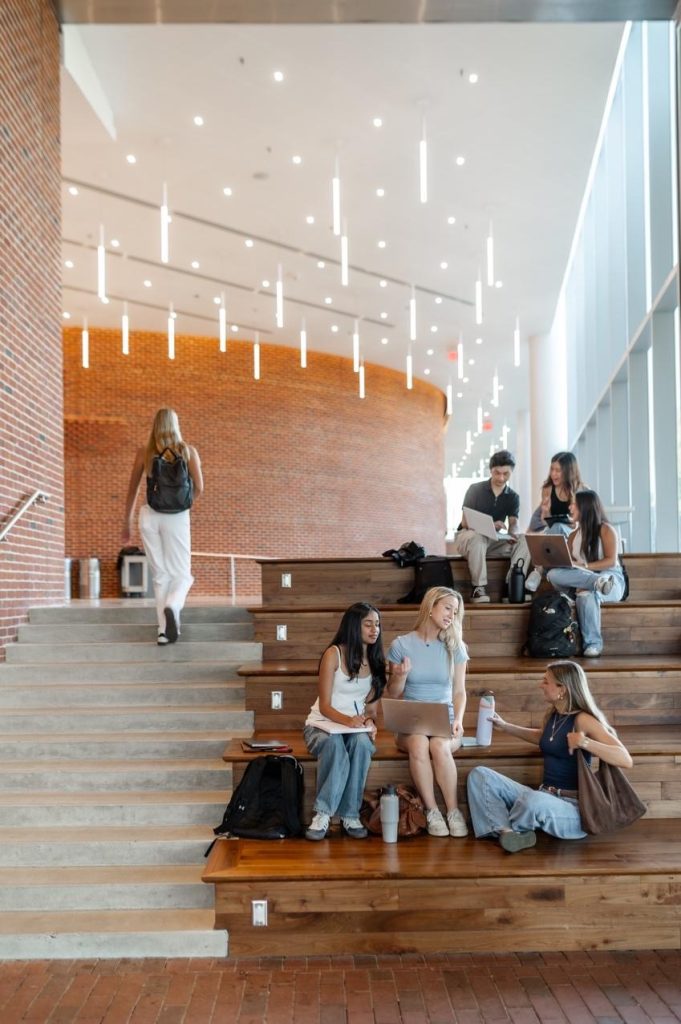
Productivity is important, but so is taking time to recharge.
Whether it’s grabbing dinner with friends, watching a movie, exploring College Park or reading recreationally, scheduling downtime can help prevent burnout during busy parts of the semester.
Having something to look forward to each week also makes it easier to stay motivated when coursework becomes demanding.
5. Meal Preparation

You don’t need to cook every meal to save time.
Preparing a few lunches, snacks or dinners ahead of time can help reduce stress during busy weekdays and may also help you avoid spending more money on takeout.
Simple options like overnight oats, pasta, sandwiches or rice bowls can be made in advance and stored for several days.
Read Next: Where Do UMD Students Grocery Shop?
6. Create a Consistent Sleep Schedule

College schedules can vary from day to day, but trying to go to bed and wake up around the same time most days can make a noticeable difference.
The American Academy of Sleep Medicine recommends that adults get at least seven hours of sleep each night for optimal health.
Adequate sleep has been associated with improved concentration, learning and mood, all of which can make both classes, studying and social life more productive.
7. Use Your Community Spaces

Sometimes simply changing your environment can make it easier to stay focused.
Instead of spending all day in your bedroom, consider rotating between different spaces throughout the week.
For example, you might:
- Complete assignments in a study lounge
- Work on a group project in a collaborative space
- Exercise before class
- Meet friends in a shared lounge before exams
Changing locations can help separate work time for relaxation time while making your routine feel less repetitive.
Sample Weekly Routine
Here’s one example of how a balanced college schedule might look:
| Time | Monday-Friday |
| Morning | Classes, breakfast and review notes |
| Afternoon | Study session, lunch and errands |
| Late Afternoon | Workout or club meeting |
| Evening | Dinner, homework and downtime with friends |
| Night | Prepare for tomorrow and get good sleep |
Remember that your routine doesn’t have to be perfect. The goal is to create a schedule that’s flexible enough to adjust when assignments, exams or unexpected events come up.
Building Healthy Habits at Rambler College Park South

Your apartment can play a role in supporting your weekly routine.
Whether you’re taking advantage of Rambler College Park South’s newly renovated fitness center, finding a quiet place to study or spending time in the lobby between classes, having comfortable community spaces nearby can make it easier to stick with healthy habits throughout the semester.
A good routine isn’t about filling every hour of the day, it’s about creating enough structure that you have time for academics, friends and yourself.
If you’re interested in learning more about student living at Rambler College Park South, contact our leasing team. We’d be happy to answer your questions and help you find a community that supports your college lifestyle.

Allison
Allison is a Property Marketing Intern for Rambler College Park. She's a student at the University of Maryland, majoring in Marketing and Management. Her favorite drink to order is a vanilla iced latte!
Published On: July 16, 2026
Last Updated On: August 11, 2026